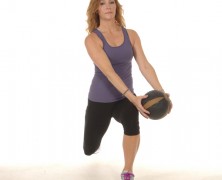
Good balance isn’t just for surfers and skiers. As an MMA fighter, you need good balance to prevent injury, build strength, and control your opponent. Ask your average fitness professional how to train for balance, and he or she will probably recommend you hop aboard a wobble board, balance ball trainer or the like — all unstable-surface training (UST) devices.
But recent research suggests that the practical applications for UST are more limited than wobble-boarders would have us believe. Doing UST can actually de-power healthy MMA athletes because it’s not functional. (In its truest sense, functional training prepares individuals for the demands of work, daily life and competitive athletics.) The floor of a typical MMA ring or cage doesn’t move so, unless you’re preparing to surf, skateboard or snowboard, wobble exercises may detract from your goal: performing well on solid ground.
MMA Supplements
MMA Nutrition
Stable Surface vs. Instability Recent studies put a group of athletes on a standard stable-surface training program and another group on an unstable-surface program. This research showed that replacing as little as 2 to 3 percent of overall training with unstable-surface training in healthy, trained athletes impaired the development of sprinting speed and vertical jump height.
Why the drop in power? It could be because UST causes you to pronate more quickly and for longer periods of time than does stable ground, putting you constantly in “deceleration mode.” Over time, this could limit how well you can store and release elastic energy in lower-body muscles during running and jumping. Or, UST might simply train you to react tentatively, even when an explosive movement is required.
While the specific reasons UST interferes with power improvements warrant further investigation; our training needs to reflect the demands of our sports. We can’t train slowly on an unstable surface and expect to be fast and powerful on a stable surface. The study that trained on stable surfaces showed significant gains in power tests such as the vertical jump and sprinting speed. It’s no leap of logic, then, to presume it’s beneficial to use that kind of surface during training if we want to jump higher and run faster. Or for MMA: hit hard, sprawl faster, kick higher, or shoot with more speed.
So what can you do to improve your balance? Simply put, you need to challenge your stability while your lower body remains in contact with solid ground. This includes training techniques ranging from single-leg work and asymmetrical loading to applying destabilizing forces while attempting to remain stable.
Train on One Leg. You can incorporate unilateral (single-leg) training into what, for most of us, is a bilateral training world. In other words, keep one foot planted firmly on the ground. Besides strengthening the small stabilizing muscles around your spine, unilateral training helps you build strength equally in both legs (it doesn’t allow for unhealthy compensation patterns the way bilateral training does), strengthening any weak points in the chain. You’ll also reinforce knee-stabilizing muscles, thus preventing knee injury.
Alter Gravity. You can also improve your balance by moving your center of gravity upward or forward. The higher your center of gravity, the less stable you are, which forces those core and intrinsic spinal muscles to work harder to compensate. An object with a lower center of gravity is more stable because more work is required to topple it. To challenge yourself, raise your center of gravity by performing moves with one or both arms above your head or in front of you, he suggests. You challenge yourself more by standing with both feet planted, bringing a barbell to chest level and then raising it overhead. The higher you go, the tougher it is to stabilize.
Close Your Eyes. Closing your eyes during certain exercises can improve your proprioception, which in turn can help prevent injury by increasing your agility and reaction times. By shutting off your sense of sight, you force your neuromuscular system to do all the reacting. Closing your eyes works best when you’re performing the most basic of exercises. Start by closing one eye while you stand still with both feet on the ground, then progress to standing with both eyes closed, standing on one foot with one eye closed, and finally standing on one foot with both eyes closed.
When Is Unstable-Surface Training a Good Idea? There are times when unstable-surface training (UST) is not only helpful, but necessary. Lower-body UST has a ton of merit in those returning from ankle sprains. UST has proven effective time and again when addressing the chronic functional ankle instability found with sprains. This is because UST helps to retrain the peroneals — the muscles on the outsides of your lower legs — to react quickly and prevent future sprains.
UST is great for training your upper body, too. While in sport and life, the lower body is in contact with a stable surface most of the time; the torso and arms are constantly engaged in motion without being anchored to the floor. So it’s appropriate to work the upper body and torso by making them unstable, as long as your feet are solidly planted on the ground. If it’s at or above the hips, you’re in good shape. So, go ahead and do pushups on a BOSU or dumbbell presses using a stability ball as your “bench.”
swarovski crystals
1. BETTER POSTURE – If you have rounded or hunched shoulders and want to improve your posture, here are two things you can do. Backward shoulder rolls and shoulder squeezes with short sustained holds can help strengthen you upper middle back and stretch your chest. Think of your chest as if it were the headlights of a car and always keep your head lights up. Avoid arching your back. You’ll soon walk straighter, stronger and be on your way to better posture for life.
2. METABOLISM – Exercise not only increases the metabolic rate for the duration of the activity, but also for many hours after completion. Studies have indicated that the resting metabolism is still elevated some 18 hours after the exercise period. That means you’re still burning calories long after you’re finished working out.
3. WEIGHT LOSS – “It’s hard to lose weight and keep it off”. How many times have you heard that? The recent release of information saying that we have a fat gene is very depressing. It would be so easy to believe the “doomed to be fat” editorials or the notion that there’s little that we can do about how much we weigh. But don’t you dare for a minute, buy into that kind of thinking. If you watch what you eat and stay active, how much you weigh will be “OK”. Think about it, there are people you know who have been successful at losing weight and keeping it off. Think positively.
4. FLAT ABS – Don’t get too hung up on having the perfect flat stomach. For some people, this goal may be impossible. Even if you are very thin, your internal organs may give a slight roundness in your abdominal region. The flatness of your stomach depends, in large part on your genetics. That is, whether or not your body tends to store fat around your midsection or elsewhere.
5. HEART – Exercise has been proven to protect the heart. A moderate amount of exercise increase HDL cholesterol. It also lowers blood pressure, makes you less likely to gain weight, increases insulin sensitivity in the muscles and lowers the risk of formatting blood clots. Fit individuals have a lower risk of heart disease.
6. BMR – Our Basal Metabolic Rate (BMR), which is the number of calories burned at rest, decreases with age. Researchers have realized that a person’s lean body mass is the key to compiling a definitive figure. The best way to maintain lean body mass is by including strength training to your workout regime. Without strength training, the BMR may drop by 100 calories per decade, starting at age 20, so build those muscles and burn more calories.
7. STRENGTH TRAINING – Is an excellent way to slow down the aging process, In fact, one researcher indicates that much of what we call aging, is nothing more than the accumulation of a lifetime of inactivity. For example, muscles shrink due to inactivity – a process we call atrophy and body fat increases as a result. Also linked with inactivity are risks of diabetes, hypertension and osteoporosis. By preserving muscle mass, we may prevent these problems from occurring.
8. SPOT REDUCING – It is a myth that abdominal exercises like sit ups burn fat deposits around the waist. The fact is, abdominal exercises can strengthen your abdominal muscles which in return help burn fat overall but it won’t selectively burn abdominal fat. You can’t spot reduce, which means to lose weight from specific regions of the body. However, this is not to say that doing abdominal exercises is a waste of time. When properly done, they strengthen and tone your abdominal muscles which are otherwise hard to exercise. Strong abdominals muscles provide better support for the back and may alleviate some back problems. The best way to lose fat is exercise combined with a low fat diet.
9. INFLEXIBILITY – in the quads can alter pelvic alignment, which in turn contributes to problems in the lower back. Lack of muscular coordination in this area increases risk of accidents and falls. Remember to include flexibility and coordination exercises when working out.
10. WOMEN – generally lose between 3 and 6% of their bone density annually just before and after menopause. Researchers estimate that in the women they studied, waling generally delayed osteoporosis by about 7 years and also conveyed cardiovascular benefits.
11. WOMEN & HEALTH – Women who exercise regularly experience as much as 60% reduction in the risk of breast cancer. Those who participated in at least 4 hours of exercise per week appeared to reap the greatest benefit.
12. WEIGHT TRAINING – Research has found that as women become stronger and fit with weights, they begin to spend time pursuing other physical activities, such as team sports like tennis or join a cycling group, all because their stronger.
13. HEALTH – Did you know that strokes are rare in women 25-44? Under age 45, only 10/100,000 women lose their lives to stroke or other brain disorders. After 45, however, the rate zooms to 65/100,000 and continues to increase with age. The best way to avoid stroke is to control your blood pressure by keeping weight and cholesterol in check through healthy eating and regular exercise.
14. AFRICAN AMERICAN WOMEN – More than 40% of African American women weigh more than 20% above their ideal body weight, which gives them a 90% greater chance of developing heart disease. This extra weight, combined with a lack of exercise, contributes to other conditions that weaken the heart and one’s overall health, including high blood pressure, diabetes, and high cholesterol. So get movin’!
15. WEAK MUSCLES – A recent study indicated that half of women age 65 cannot lift 10 pounds. Women have less muscle mass to begin with, and they start to lose muscle strength more rapidly after age 60. Often times they become so profoundly weak that they must be put into nursing homes because they are unable to perform their daily functions. So start pumping those weights.
16. EXERCISE DURATION – How much exercise is enough? Well, fitness experts say at least 60 minutes of moderate intensity activity a day. If you don’t have 60 straight minutes, break it up into 6, 10 minute workouts or 30 minute workouts 4 to 6 days a week.
17. MUSCLE MASS – More muscle creates a higher demand for energy. In order for muscles to maintain itself at rest and during exercise, you’ll need to eat more foods high in nutrients. How do we create this formula…resistance training builds strong muscles, and eating foods low in fat will help to prevent the loss of muscle mass.
18. TOTAL BODY – just like baking a pie, you need all the ingredients to have a beautiful and tasteful pie, same with your body, it’s not one without the other, taking care of your body means as a whole, mentally, physically and spiritually!
19. HEALTHY FOODS – Eating foods that are rich in antioxidants are better for your skin, cells and body. Think organic, non-chemical foods that are not loaded with toxins. Eat fewer calories
20. REST – Your body needs rest to repair itself. Also, a rested mind is a happy mind that can think more clearly and has more energy. Active minds are more likely to remain healthy.
21. LIVE LONGER – Be active and live longer! Physical activity is critical to longevity and independent living. Death rates in non-active people double the rate of those that live an active lifestyle…so keep moving!
22. ADVICE – Eighty percent of women rely on their friends for advice and support when trying to improve health habits. Eating healthier diets and increasing physical activity are the main ways that women attempt to improve their health and succeed.
23. WORKING OVERTIME – Women who work overtime consume more high fat, high sugar snacks and caffeinated beverages, smoke more, and get less exercise. People snack more when they work in hostile, high stress environments. Snacking at work is not necessarily bad if you choose healthy foods such as fruit, low-fat yogurt, or high-fiber crackers.
24. MAGNESIUM – Calcium and vitamin D get all the glory when it comes to promoting bone health. While they are the major nutritional players in bone metabolism, minerals such as iron and magnesium are also important. Good sources of magnesium include fruits vegetables and whole grains. You can also beef up magnesium intake by taking a good multivitamin that contains it.
25. METABOLICALLY FIT – Sixty percent of Americans are overweight, while 25 percent are obese. Many of these people exercise regularly, some vigorously, but are still overweight. A few extra pounds are okay if you are metabolically fit- as long as you exercise regularly. It’s best to be lean and active, but you get some health benefits from exercise no matter how much you weigh. It’s easier for a fat person to increase physical activity than to lose weight through diet alone.
26. VITMAMIN D – Skin doctors have been telling women for year to stay out of the sun and avoid tanning beds to avoid wrinkled skin and skin cancer. While the bronzed tan look is still popular, many women cover up or use protective sun lotions to protect their skin. Avoiding the sun’s rays completely is not a good idea. The body gets vitamin D largely from a reaction that requires sunlight. The vitamin is essential for building strong bones, preserving muscle strength, and preventing multiple sclerosis, diabetes, and cancer. It also helps regulate cell growth, immunity, and energy metabolism. Dermatologists (skin doctors) countered that people with vitamin D deficiencies can take supplements and should avoid excessive sun exposure.
27. STRESS – Stress can literally give people gray hairs and cause cells to age and die faster than normal. Cells can only reproduce a limited number of times. Stress shortens that interval, which makes it more difficult to repair injured cells and fight disease. University of California, San Francisco found greater cell damage in women who were under high levels of stress compared to women who weren’t. Stressed women had cells that were judged 10 years older than the cells of unstressed women of the same age. The scientists speculated that free radicals- destructive chemicals produced normally during metabolism- were responsible for stress-related cell aging. Try to reduce the stress in your life- you might live longer.
28. WHOLE GRAINS – Eating more high grain foods contributes to weight loss and prevents disease. New FDA food guidelines recommend five to ten servings of grain products- at least three of which should be from whole grains. They also urged people to eat fewer servings of refined grain products. Whole grain foods must contain all three layers of the grain- the endosperm, the bran and the germ. Read the label carefully when shopping for these foods. Dark bread does not necessarily contain whole grains.
29. DARIY FOODS – Most women know the importance of calcium intake for building and maintaining strong bones. Dairy foods, such as milk and cheese, are the best sources for calcium. Dairy foods may also help fight fat. Iranian scientists found that men and women who consumed the most dairy products are 80% less likely to be obese and have a lower body mass index. Try to consume three servings per day of non-fat dairy foods.
Student Aid
Body building is getting more and more popular these days and for good reason. However, there are people getting into the sport and failing simply because they aren’t doing it correctly. The following are some great fitness tips to help you get fitter, stronger and healthier.
1. Get a program that will best suit you. Every body building program or workout is different. So always consult a qualified trainer to make sure that the fitness program will not hurt you. Going for a fitness program that sounds good but is out of your league can only cause frustrations and even injuries. So pick wisely.
2. Be realistic in your goals. Make sure that your target is achievable and realistic. The program also needs to be practical and not give you false hope. In fitness and body building, it is important to be aware of the blocks you will encounter.
3. Focus and work the muscles. When you develop muscles, you burn more calories and reduce fats in your body. Multi-joint exercises and weight lifting are recommended to help you achieve a more muscular physique. They aren’t just effective but time saving as well.
4. Be systematic. Your muscles should be working harder over time. Repeating the same sets of exercises and same weight without getting your muscles to work harder will not give satisfactory results. You can record your daily results and make the progression based on your previous data. A daily log will also motivate you since you are able to track how far you have gone. It builds confidence since there is a written proof something that was successfully accomplished.
5. Perform a set of exercises in 10 repetitions. Every number that was accomplished is called a repetition. Try to make every repetition with less momentum as much as possible. The lesser the momentum, the harder your muscles work. And the harder they work, the bigger they become.
6. Be flexible and perform a variety of exercises. Every exercise program should have variety. You can change your exercises, goals and sets every month to keep you motivated and on-the-go. Doing this will prevent boredom and losing energy physically and mentally.
7. Stay motivated! This may be the most important fitness tip of all. Many people drop out of fitness programs and workouts over time. Do not fall victim to this! Keeping an eye of your goals is a way of staying with your program. Remember that motivation gets you started and habit keeps you going.


Recent Comments