Golf core exercises. You hear that phrase more and more on the television by the commentators referring to the area of the body most of the touring pros focus on with their golf trainers to improve their power output and prevent low back injuries.
Core training is the buzzword even in the general fitness world. There are specific classes in the local fitness centers for core training. There are different pieces of equipment that are used in every one of these classes. Some use the bosu ball, others use a stability ball, and many use exercise tubing or weights.
Vijay Singh for example uses weighted medicine balls with his trainer to work his golf core muscles throughout the whole week of the tournament. He does hundreds of throws from different angles and body positions to challenge not only his core strength, but stabilization, balance and coordination.
If I am not correct his caddie is his trainer on occasion! How convenient! The best of both worlds! Although most people don’t want to see their trainer after a tough workout…Vijay is the exception to the rule.
Hearing the phrase golf core exercises, and knowing what your core is are two different things entirely. As a fitness professional…it’s easy for me to throw out that phrase often to impress would-be clients or customers to my golf fitness training products.
But that’s not the case. Understanding what your core is and how it plays a critical role in producing maximum power; injury prevention and even stability is very important. Once you know…you’ll soon realize this may be your missing link to a great game.
This area (core) starts roughly at your belly button and goes up to the bottom of your sternum. It is the engine of your body and awareness of your core affects golf the most. Think of it as the link in the chain that needs to be the strongest, not the weakest.
Two simple core training exercises for golf that will quickly strengthen your core is ab crunches and back extensions. These would be your initial exercises to give you the strength to move onto rotational exercises that put a little more stress on your spine if the muscles aren’t conditioned enough.
Once you’ve accomplished the above exercises, you can move on to a crunch with a twist and a back extension with a twist. This will hit your rotational strength right away…which will quickly equate to greater power output and distance.
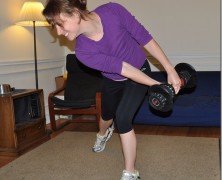
You can then progress up to standing on your feet doing several different variations of rotational movements with a single dumbbell, standing upright and also in your golf posture.
Core exercises for golf are very effective when you get into motions with rotation, resistance and balance. This is called golf specific training, and is the only way to go if you want to see improvement in your golf swing and overall performance.
Now that you have a basic understanding of golf core exercises…you hopefully will see how important it is in your overall golf improvement plan. Next time you hear that phrase on the television, you’ll know what golf core exercises are.
In recent years several athletes, fitness gurus or personal trainers insist that strength training is where it’s at for both weight-loss, longevity and (of course), muscle building. Some suggest abandoning cardio-vascular exercise altogether.To resolve the cardio vs. strength conundrum, I collected studies and talked to experts to find out how each form of exercise would fare. Whether you want to get lean, burn calories, or win a marathon, I’ve unraveled which type of training you should dedicate your efforts to:
To burn fat, and keep it off:Cardio: On average, cardio has a slight advantage when you account for calories burned during exercise. You’ll burn 10 to 12 calories per minute while running or cycling. Compare this to about 8 to 10 calories per minute lifting weights, according Dr. Wayne Westcott, Ph.D., director of research at South Shore YMCA in Quincy, Massachusetts.Strength training: Weight lifting spikes your metabolism for an hour after your workout. This is when your body arduously recovers from muscle injury. That means that you’ll burn an additional 25% more calories after a strength training session. For example, if you burned 300 calories while lifting weights you’ll burn an additional 75 calories after you’ve left the gym. If you hoist heavier weights or rest less than 30 seconds between sets, you can burn even more calories.Additionally, for every pound of muscle that you build into your body, you’ll burn an extra 40 calories a day. That’s about 4 pounds of fat burned per year without doing anything more. Muscle burns about 90% of the calories you consume. Therefore, it is safe to assume that the more muscle you build into your body, the higher your calorie-burning (metabolism) capacity will be. Conclusion: For fat burning – strength training.To relieve stress:Cardio: According to a 2005 study in the European Journal of Sports Science, just 15 minutes of aerobic activity two to three times a week can significantly reduce anxiety. If you bring that up to 3 – 5 days per week, you can reduce fatigue by almost 50%. According to Dr. Madhukar Trivedi, M.D., director of the University of Texas Southwestern Medical Center Mood Disorders Research Program and Clinic, cardio-vascular exercise boosts serotonin levels in the brain. Serotonin is a key neurotransmitter involved with relieving symptoms of depression. Strength training: Researchers observe promising results of the mood-altering effects of lifting weights. However, more studies are needed to determine the duration, intensity, and techniques needed to match cardio’s benefits. Conclusion: To relieve stress – cardio.Injury PreventionCardio: Unfortunately, the frequent high-impact and repetitive nature of cardio puts a lot of pressure on your ligaments, joints, tendons, muscles and the cartilage in between. Strength training: According to researchers in a 2006 study of the American Journal of Sports Medicine, a balance-training program reduces the risk of ankle sprains among athletes. Lead study author Dr. Tim McGuine, Ph.D., senior athletic trainer and research coordinator at the University of Wisconsin-Madison says, “Functional strength training teaches your brain to allow muscle contractions that are quick enough to prevent or minimize injuries.” Functional exercises include lunges, rows, squats, and presses that force you to bend at multiple joints. Involve your core and improve your balance by working on stability balls, Bosu or stability disks. Conclusion: To prevent injuries – strength.LongevityCardio: “Nothing compares with cardio for optimizing longevity. It reduces the risk of obesity, heart disease, high blood pressure, type 2 diabetes, osteoporosis, stroke, and even certain types of cancer,” says Mike Meyers, Ph.D., an American College of Sports Medicine — certified trainer and director of the Human Performance Research Laboratory at West Texas A&M University. According to a 2007 study published in the Journal of Internal Medicine, a stronger heart pumps more blood with every beat. It also circulates oxygen more efficiently throughout your body. Finally, aerobic activity decreases inflammation around the heart and may increase the “good” cholesterol in your blood by up to 8% in just 8 weeks. Strength training: In a 2006 study conducted by the National Institutes of Health, strength training just twice a week can decrease intra-abdominal fat. This is the fat that constricts blood vessels and wraps around your organs.Conclusion: To add years to your life – cardio.Improve self-esteemCardio: Athletes have high confidence levels because of the sense of accomplishment they feel whenever they cross the finish line.Strength training: Strength training rushes blood to your muscles, making them expand and appear more toned. Confidence also grows because of lifting heavy weights. Some people get such confidence and self-esteem out of shaping and toning, bodybuilding, and powerlifting, that many of the other benefits are almost secondary for them. In a 2006 study at McMaster University in Ontario, female subjects’ self image improved, particularly by the physical results of increasing the amounts they can lift.Conclusion: To improve self esteem – strengthEndurance and Power Cardio: “The best way to train for an endurance event is by practicing it,” Meyers says. “Swimmers, for example, need to learn how to breathe properly, and cyclists need to hone cadence.”Strength training: Strength training is fundamental in improving speed especially for core and legs. Plyometrics improves stride power (runners) or pedal power (bikers). According to Diane Vives, C.S.C.S., owner of Vives Training Systems in Austin, Texas. Conclusion: To improve endurance and power – draw.
One Tree Hill


Recent Comments